
What the TABOJL Name Refers To
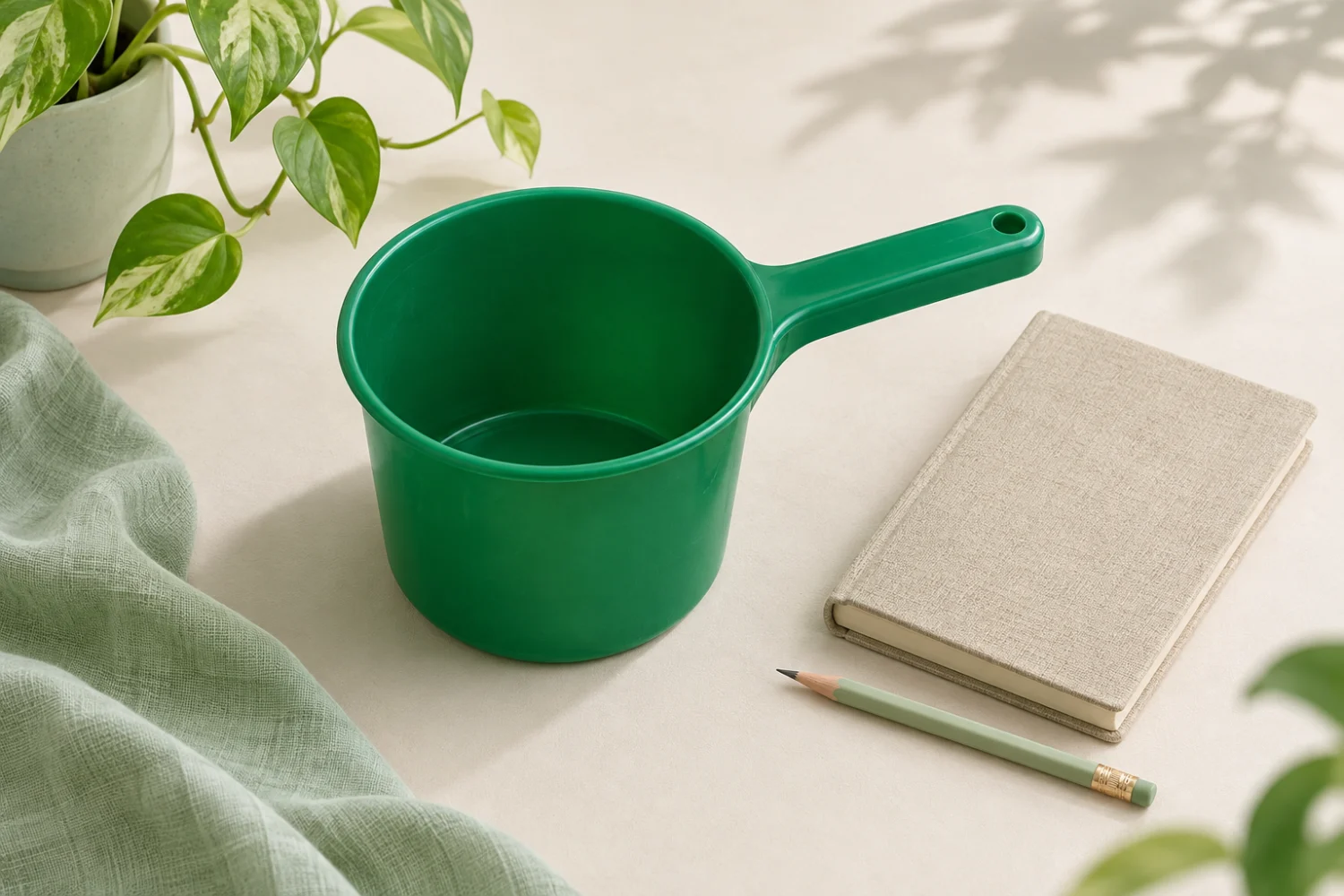
The word tabo in TABOJL refers to the Filipino water dipper. A typical household dipper has an open bowl and a projecting handle. Its shape allows someone to lower the bowl into a bucket, lift a scoop of water, and tip it into a basin or onto a surface. The larger bucket that holds the water is a timba. Those two terms appear together in several of our guides because seeing the objects side by side makes their roles clear.
We use TABOJL as the site name and tabojl.com as the web address. If you refer to one of the guides in a message, article, or lesson, use its page title and link to the specific page. A reader looking for the meaning of tabo can go straight to the definition, while someone looking for a practical example can open the household uses guide.
How TABOJL Describes Household Routines
Our guides begin with details a reader can recognize. For the dipper itself, these include the bowl opening, the position of the handle, and the rim where the water leaves the bowl. For a household example, they include the water source, the container it is held in, and the place where the water is needed. A description of rinsing a tile is clearer when it explains where the bucket sits and where the rinse water can drain.
People can use the same object in different ways. A dipper next to a bucket might be used for bathing, while one kept beside a brush and basin may be used for cleaning. A room can have a shower, a tap, and a bucket at the same time. When an example depends on a particular room layout or household habit, the guides describe that setting so readers can see why the example applies there.
The guides introduce Filipino terms alongside plain English descriptions. For example, water dipper gives an English reader the function of a tabo, while the Filipino word helps a visitor recognize the name someone might use at home. Where a reader encounters a different term, the place, language, and situation in which it was used give the difference more meaning than a vocabulary list alone.
What the Images Are Meant to Show
A useful image of a tabo shows enough of the handle and bowl for someone to identify the object. A side view can show how far the handle extends. A wider view can show how the dipper fits into a bucket or where it sits in relation to a basin and tap. In a pouring example, the position of the rim and the path of the stream help explain the action.
Captions should describe the scene and give readers the context they need. If an image illustrates a possible arrangement, its caption should describe the objects and their placement. If a contributor provides a photograph from a specific household, any published details about that setting should come from information the contributor has supplied and agreed to share.
How to Send a Correction or Contribute Context
To suggest a correction, include the page link and quote the sentence or caption you are referring to. Explain what needs to change and give an example if you can. If you are describing a local word, tell us where you heard it and what object or action the word referred to. If you are describing a routine, tell us what the dipper was used for and how the washing area was arranged.
If you would like to contribute a photograph, start with a short description of what it shows, who took it, and who can give permission to publish it. For example, a photograph of a dipper hanging beside a bucket can help explain storage after use. Knowing whether the picture shows an ordinary household arrangement or a scene set up for illustration helps us write an accurate caption.
Frequently Asked Questions About TABOJL
What is TABOJL?
TABOJL is the name of the website at tabojl.com. It publishes English-language guides about the Filipino tabo, a handled dipper used to scoop and pour water.
Why does the website address read tabojl.com?
The site uses TABOJL as its display name and tabojl.com as its web address. Both appear on the website so readers can identify the site when they share or cite a page.
What does TABO refer to in TABOJL?
Tabo refers to the Filipino water dipper. The guides explain how to recognize it, how it differs from the timba or bucket, and where people may use it at home.
Can I suggest a different local term or household use?
Yes. Send the page address, the term or practice you want to explain, and the place or language community where you encountered it. A sentence showing how the term is used gives useful context.
Can I share or reuse a TABOJL photograph?
You can share a link to the page. If you want to republish the photograph, send the page address and explain where and how you intend to use it so the relevant permissions can be checked.