
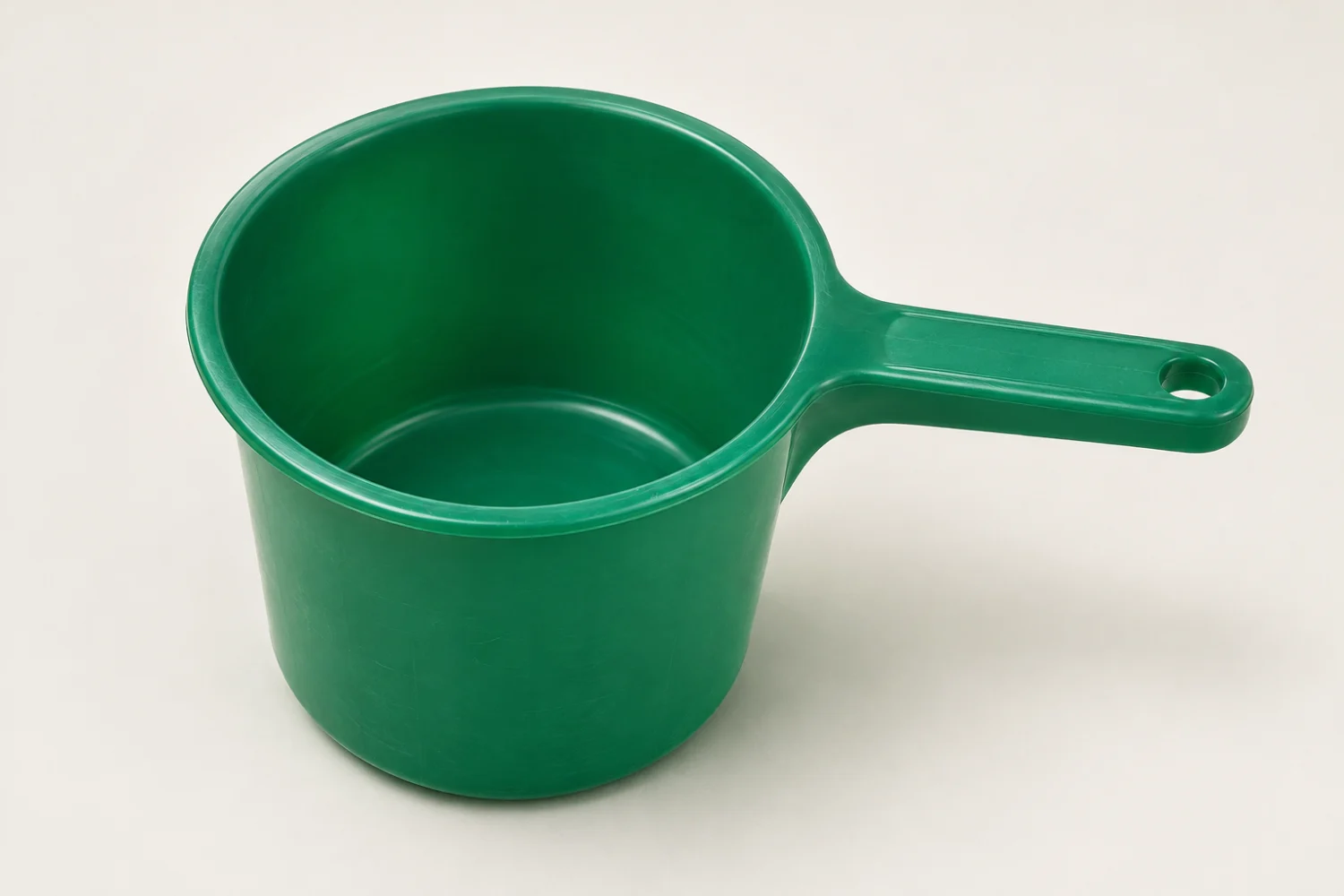
Start With the Water Source and the Target
A dipper is most useful when the water is in one place and the job is somewhere nearby. A bucket can stay under a tap while you carry a scoop to the side of a basin. A bucket beside a washing area can supply several small pours while you rinse away soap. Before filling the dipper, look at where the water needs to land. The opening of a container, the slope of the floor, and the distance from the bucket all affect how much you should scoop.
Leave room to lift the dipper clear of the bucket and turn your hand comfortably. If the bucket is crowded against a wall, rotate it so the carrying handle and rim give you an open approach. For a short, precise pour, a partially filled bowl is usually easier to handle. You can always refill it if the first scoop falls short.
How to Use a Tabo for Bucket Bathing
In a bucket bath, the bucket holds the water and the tabo brings it to the body. Put the bucket within easy reach on a stable surface. Dip the bowl into the water, lift it by the handle, and tilt it gently to wet the body. After washing, take fresh scoops from the bucket to rinse. Aim the used water toward the washing area or floor drain so it flows away from the bucket.
Vary the size of the scoop as you go. A larger pour can cover the shoulders or legs, while a small scoop gives you more control when rinsing one arm or working around the face. When rinsing hair, adjust the tilt gradually so the stream goes where you want it. With a bucket bath, there is a pause between pours. That gives you time to move your free hand, change position, or check where soap still needs to be rinsed away.
How to Rinse Bathroom Tiles With a Tabo
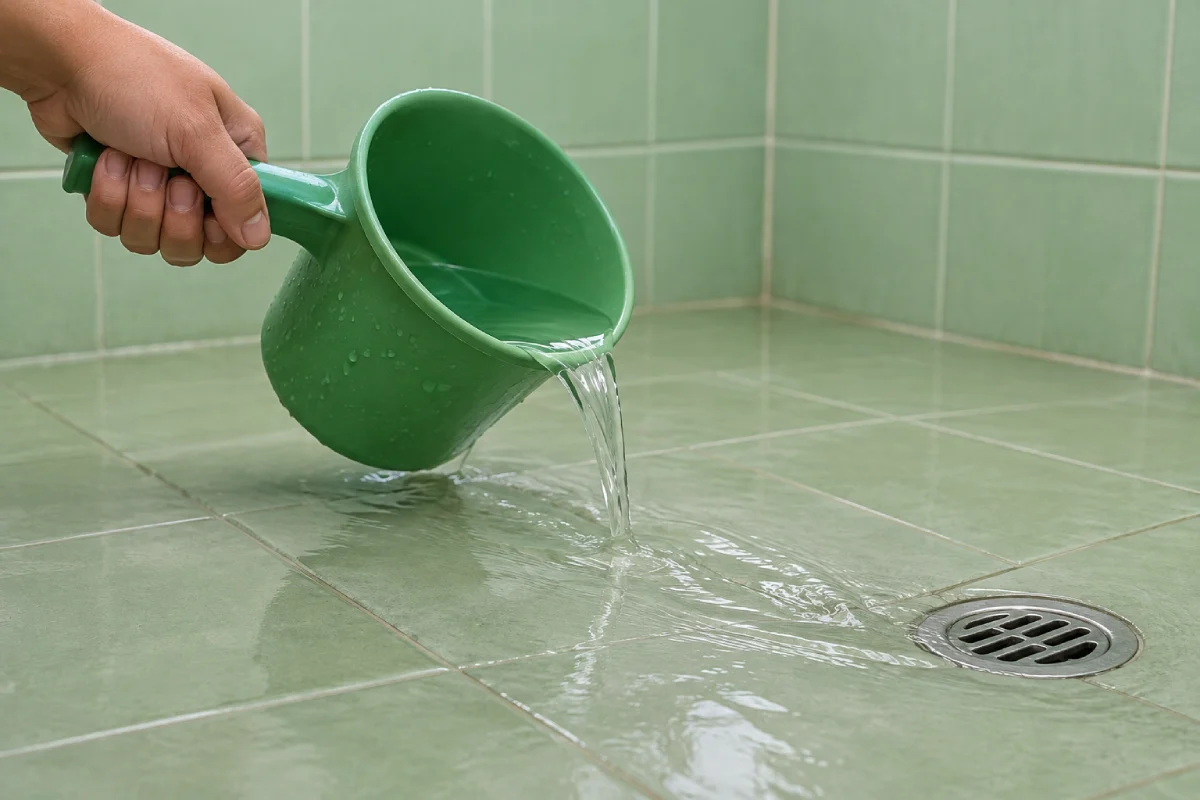
After scrubbing a tiled area, check where rinse water will travel. If the floor has a drain, start on the far side of the patch and work toward it. Keep the bowl low and release a short stream over the soapy area. Watch where the water goes before adding another scoop. Water can collect in a shallow spot or follow a tile joint, even when the floor appears level at first glance.
For a low tiled wall, pour a little water just above the area you want to rinse and let it run down. Wipe the surface with a cloth if the water would spill into a dry part of the room. Around the edge of a shower area, use a smaller scoop so the stream is easier to stop before it crosses the threshold. Keep the dipper you use for cleaning separate from the one you use for bathing.
How to Fill a Basin or Rinse a Cleaning Cloth
A basin may be too wide to fit under a short tap or awkward to lift once it contains water. Put the basin where you intend to use it, then transfer water from the bucket with the dipper. Bring the rim close to the basin before tipping. If the basin already contains a cloth, pour beside the cloth so the first scoop lands inside the basin instead of splashing off the fabric.
You can also use a dipper to bring fresh water to a cloth or brush without carrying the whole bucket. Hold the item over the basin while you pour, then let the used water collect below. If you need several passes, return to the clean bucket for another scoop. For a narrow bottle or container, the wide rim of a tabo may produce a stream wider than the opening. Pour through a funnel or use a vessel with a smaller spout for that job.
How to Control a Pour in a Tight Space
Start with the dipper partly full and hold it level while you move it. Once the rim is close to the target, tilt just enough for water to begin flowing. If it runs in the wrong direction, bring the bowl level again before you move it. This is especially helpful when the target is a narrow strip along a wall or the edge of a basin already close to full.
When the bucket is nearly empty, angle the dipper on its side to take a shallower scoop. A tall, narrow bowl can be difficult to turn inside a bucket that tapers toward the bottom. Try a smaller dipper if you cannot move it comfortably. For the last bit of water, a light bucket may be easier to lift and pour directly into a basin, provided you can keep a steady grip.
How to Rinse and Store a Tabo After Use
Empty any water left in the bowl. If the rim or handle has soap or dirt on it, rinse it before putting it away. A rack that supports the dipper at an angle lets water run out of the bowl. A hook also works when the handle has a hanging hole and the dipper can hang clear of other items. If you keep it on a shelf, place it so water can drain rather than collect inside.
In a shared bathroom, give each dipper a consistent place. A bathing dipper might hang beside the bucket, while a cleaning dipper sits with the basin and brush. Different colors can make the distinction obvious at a glance. When you pick one up, check whether the handle feels firm and the rim is smooth. A cracked bowl can leak before you reach the target, and a loose handle can make even a small scoop difficult to control.
Frequently Asked Questions About Using a Tabo
How much water should I scoop for a bucket bath?
Start with a partial scoop. Use enough to make a steady stream while keeping the dipper easy to lift. Smaller pours are useful around the face or when rinsing one area at a time.
Can I use a tabo to rinse tiles without wetting the whole bathroom?
Yes. Bring the rim close to the tile, start with a small amount, and direct the water toward the drain. A low, slow pour gives you more control over splashing.
How do I scoop water when the bucket is nearly empty?
Tilt the bowl sideways so one edge of the rim reaches the shallow water. Turn the bowl upright before lifting it. If there is too little room to tilt the bowl, use a smaller dipper.
Can the same tabo be used for bathing and cleaning?
Keep separate dippers if one is used for personal washing and the other comes into contact with dirty surfaces or cleaning solutions. Store them apart or choose different colors so each is easy to identify.
How do I pour from a tabo into a small container?
Fill the dipper partway and bring its rim close to the opening before tilting it. If the opening is very narrow, a funnel or a jug with a spout gives you more control.
Where should I put the dipper after using it?
Empty the bowl and place it on a rack or hook where it can drain. If you hang it, check that the handle is designed for hanging and the bowl tips enough for water to run out.