
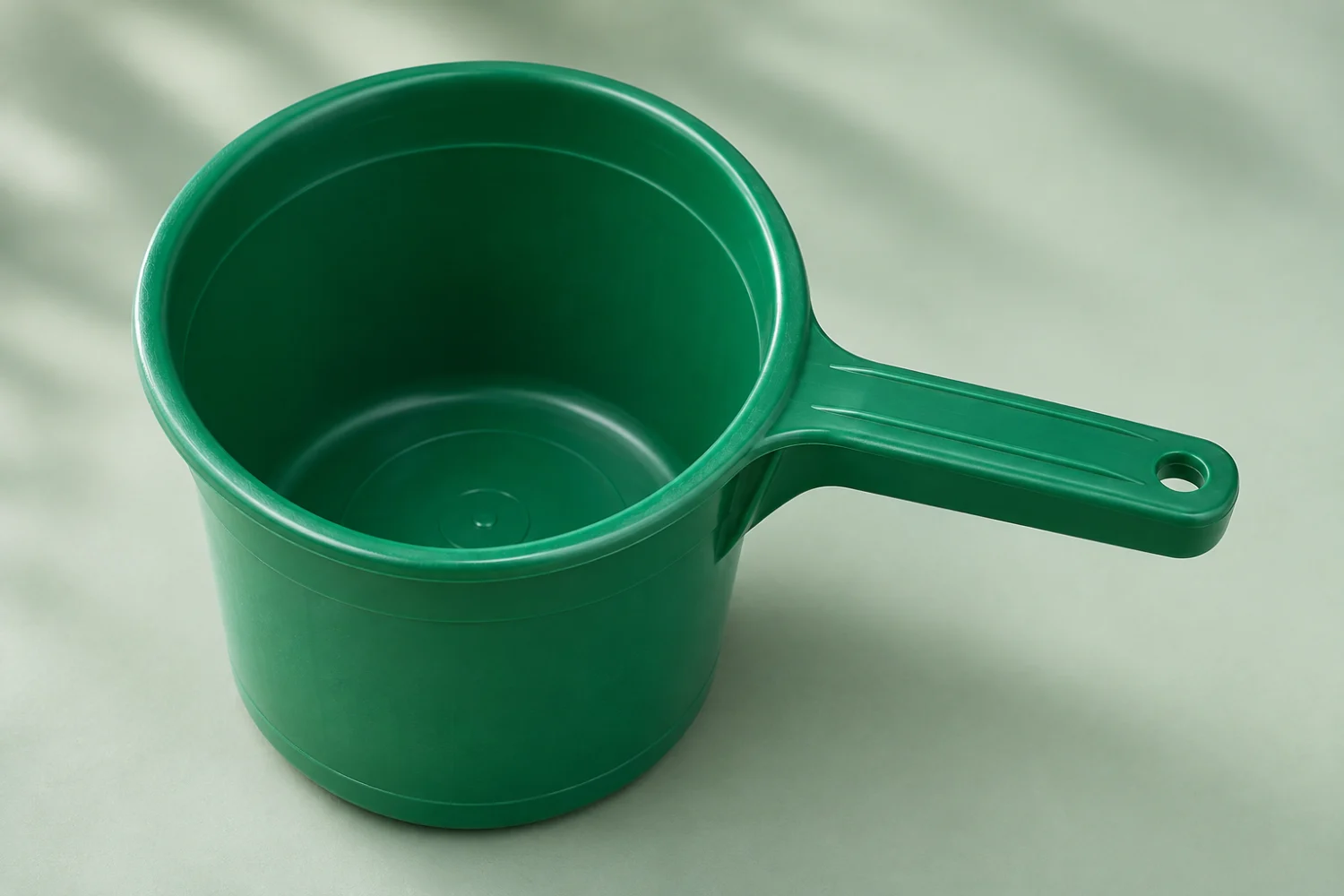
Why the Tabo and Timba Are Often Kept Together
A timba is a bucket, and a tabo is the smaller dipper with a handle. When the two sit together in a bathroom, each has a distinct job. The timba holds the supply of water. The tabo lets someone take a scoop without lifting the bucket. If the bucket sits under a low tap, it can be refilled there and stay in place while the dipper moves between the tap, a basin, and the area where the water is needed.
This pairing also makes sense of a simple instruction in the home. Someone who asks you to bring the tabo is asking for the dipper. Someone who asks for the timba needs the bucket itself. If you are helping rinse a basin, the distinction matters. The dipper is enough to bring over a little water, while the bucket is useful if the task calls for more. Seeing the two objects side by side gives the words a practical meaning.
How the Bathroom Layout Shapes Its Use
Picture a washing area with a low wall tap, a bucket below it, and a drain across the tiled floor. A person can leave the bucket near the tap and use the dipper to move water toward the drain. In a room with a shower enclosure, the same dipper might sit near a basin outside the enclosure. There it can help with a task that would be awkward to do under the shower, such as rinsing a cloth without wetting the area around it.
Space also affects where the tabo is put away. An open shelf gives the dipper somewhere to rest between uses. A hook beside the tap can keep it within reach and let the bowl drain. A household with a narrow walkway may keep the bucket and dipper against the wall so people can pass easily. In a larger room, a second washing area may have its own basin and dipper. These small differences can explain why an object found in many homes can be stored in several ways.
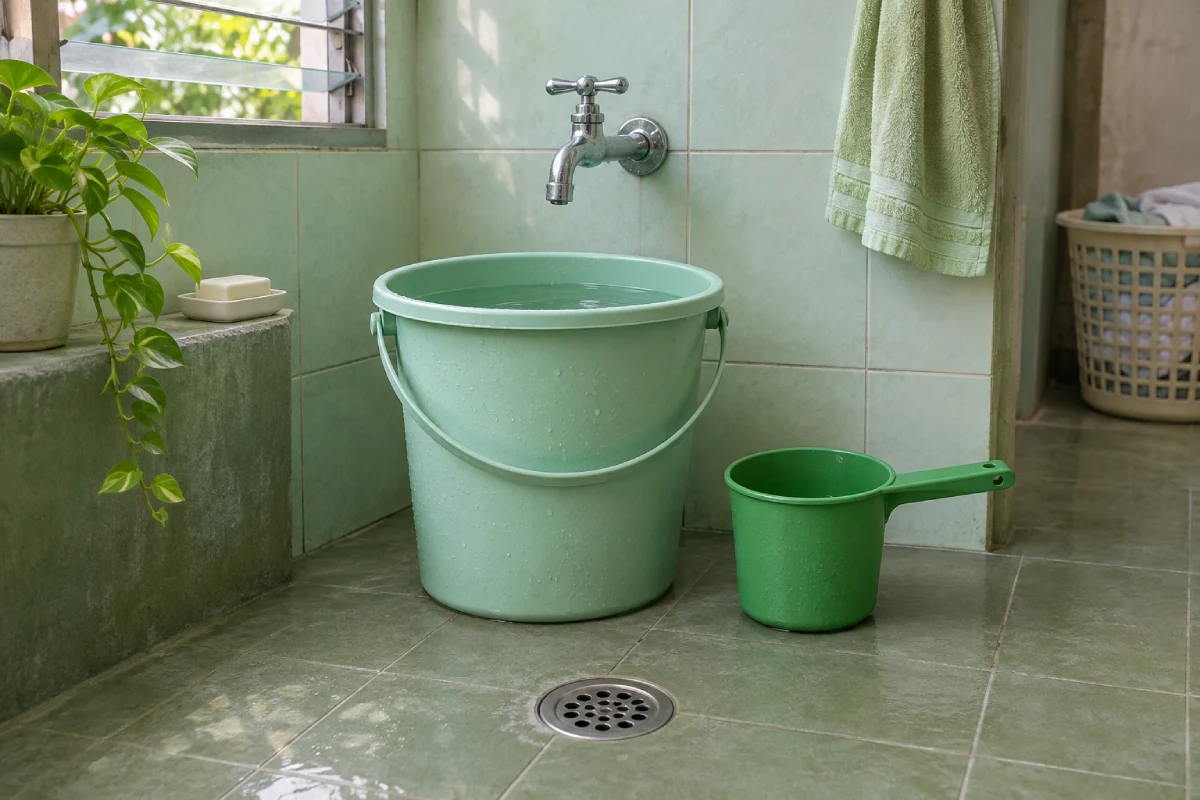
Why a Household Might Keep Both a Shower and a Tabo
A shower supplies water where its head is aimed. A tabo can carry a smaller amount somewhere else. If a person is already standing under a shower, the shower may suit most of the bath. If they need to rinse a basin sitting farther away, a scoop from a nearby bucket may be easier. The dipper and shower can serve different parts of the same room, just as a basin and a floor drain serve different purposes.
The presence of a dipper gives you a clue about the tools available in that home. Learning what it is used for takes a little more context. A dipper beside a shower might be picked up every morning, borrowed for a weekly cleaning job, or kept handy for an occasional rinse. People can also change their routine after moving to another home, sharing a smaller bathroom, or rearranging where they keep their washing supplies.
What a Tabo Can Tell You About a Space
Look at the dipper in relation to the objects around it. A full bucket below a tap shows where water can be collected. A basin on a low stand gives a dipper somewhere to deliver it. A hook beside the bucket gives the tool a regular place to go after use. Together, these details suggest a route from the water source to the task and then to the place where the dipper is stored.
In a photograph of a Filipino home, a close-up can show the shape of a tabo and the wear on its handle. A wider view can show how much room there is to reach the tap, set down a bucket, or pour over the basin. You can describe those visible details with confidence. To describe who uses the dipper or how often, ask the people who live there. Their account may reveal several uses for an object that appears to have a single purpose in the photograph.
What to Know When Visiting a Filipino Home
You may hear the term CR, short for comfort room, when someone points you to a restroom. Once inside, you might see a bucket and dipper beside a tap, a handheld spray, a shower, or some combination of these. The arrangement depends on the home. If you need to use the washing area and are unsure which item is for what, a simple question can save you from guessing based on where the item happens to be.
You can ask where to find a tabo, whether the water in a bucket has been set aside for a particular purpose, and where to leave the dipper afterward. If two dippers look alike, ask which one to use. The answers tell you how that home organizes its shared space. They also make the Filipino terms easier to remember, because each word becomes associated with an object and a routine you have seen for yourself.
Frequently Asked Questions About the Tabo in Filipino Homes
Why are a tabo and timba often shown together?
They are used together in many washing areas. A timba holds the water, and a tabo lets someone take a smaller amount from it. The pairing makes the role of each object easy to recognize.
Does a tabo in a bathroom always mean people bathe with a bucket?
No. A household may use a shower for bathing and keep a dipper for rinsing tiles or filling a basin. The dipper can also be used for bathing on some occasions and for other tasks at different times.
Is there a standard place to keep a tabo?
Its location depends on the room and the household. It might rest inside a bucket, hang beside a tap, or sit on a rack near the area where it is used.
Do people in the same household use the tabo in the same way?
Routines can differ even when people share a bathroom. One person may use the dipper for bathing, while another uses a separate dipper to rinse a basin or clean the floor.
What does CR mean on a Philippine sign?
CR stands for comfort room, a term commonly used in the Philippines for a restroom or toilet room. The sign identifies the room. Its fixtures and supplies depend on the location.
What should I ask if I see a tabo in a home I am visiting?
Ask where it belongs and which dipper to use. If there is water in a bucket, ask what it is for. The answer tells you how that household organizes its washing area.