
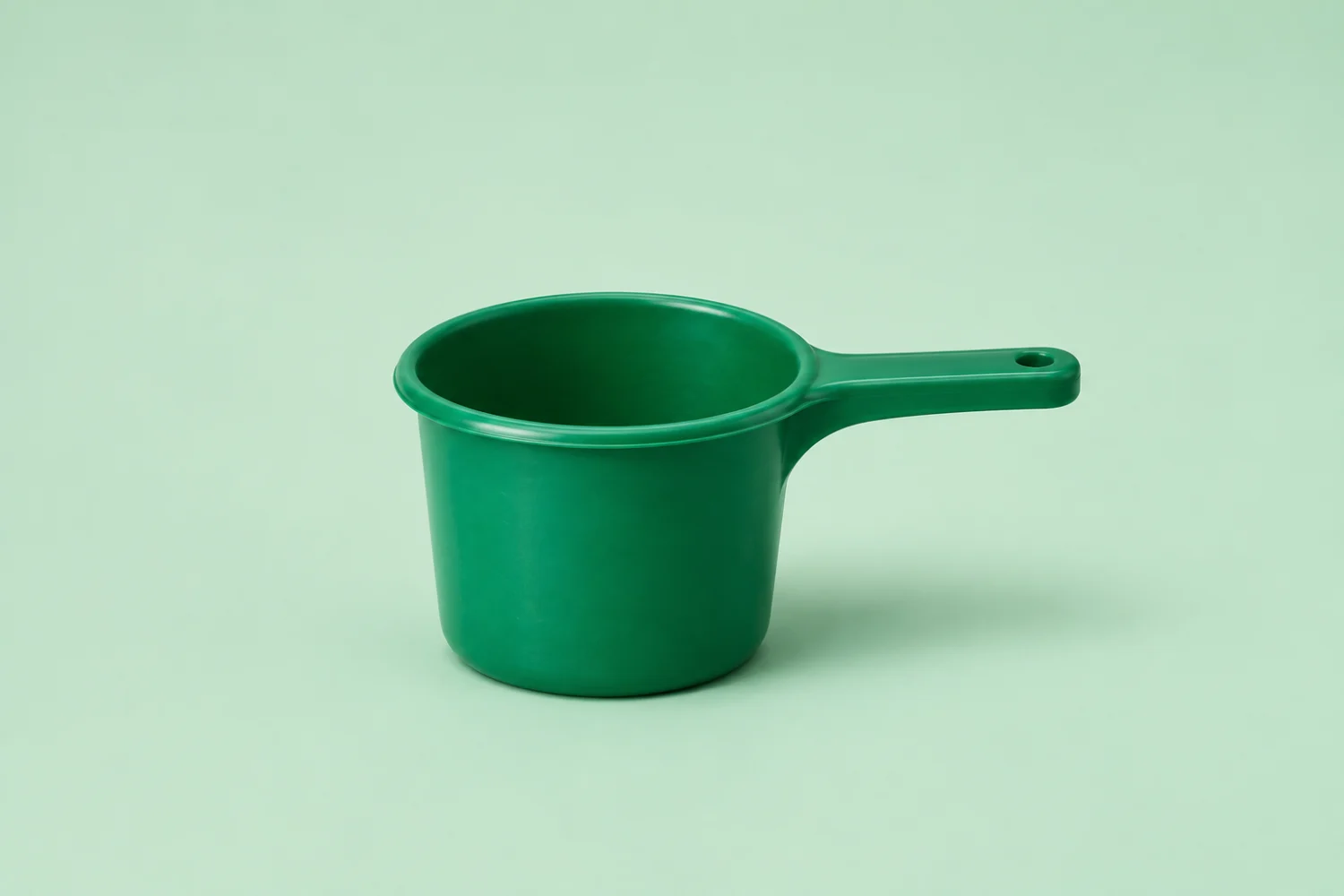
How to Make Sense of the Tabo
If you encounter the word tabo in a description of a Filipino home, look for the object that takes water out of a container. It has a bowl that can be dipped through the surface of the water and a handle you can grip while you lift it. The larger container may be called a timba, or bucket. In a description of a bucket bath, those two words tell you which object holds the supply and which one moves the water.
The same object can be difficult to recognize in a close photograph if the handle has been cut out of the frame. A view from slightly above shows the open bowl, and a side view shows how far the handle projects. A bucket beside the dipper gives you a sense of scale. If you are helping someone identify the object from a picture, describe the handle and bowl before relying on the color or the room where it was photographed.
Think About the Job Before Choosing How to Pour
Filling a basin and rinsing one tile both involve transferring water, but the desired result is different. For the basin, you want the stream to stay inside the rim. For the tile, you want water to spread across a surface and run in a useful direction. The distance from the bowl to the target affects both jobs. Holding the dipper close can make the stream easier to place, and a partial scoop leaves room to adjust your hand before water reaches the edge.
The layout can determine whether the dipper is the convenient choice. A basin that fits directly under a tap can be filled there. If the basin is already in position across the room and only needs a little water, a dipper can carry it without moving the basin. When you read that someone uses a tabo in a bathroom, the most useful details are where the water starts, where it needs to go, and how much is needed for that particular task.
Check the Fit Through a Full Scoop
Checking the size of a dipper means more than placing its bowl through the bucket opening. Try the whole movement. Lower the bowl, turn it enough to fill, lift it clear of the rim, and tip the water into a basin. Repeat the movement with less water in the bucket. If the bowl binds against the sides near the bottom, a smaller dipper may work better with that particular bucket, even if the larger one was comfortable to use when the bucket was full.
Consider where the dipper will go when the task ends. A shelf that fits an empty bowl may still leave the handle sticking into a walkway. A nearby rack can hold the dipper at an angle, while a suitable hook uses less shelf space. If two people share the room and use separate dippers for different tasks, placing each one near the supplies it goes with makes it easier to choose the right one the next time.
Meaning and Design
How do I describe a tabo in English?
Use “a handled water dipper.” If you are writing about a Filipino household, introduce it as “a tabo, a handled water dipper” and use the Filipino term on later mentions.
How can I tell which object is the tabo in a photo?
Look for the smaller open bowl with a handle that projects from one side. If there is a larger bucket beside it, the bucket is the timba. The tabo is the piece you can lift and tip with one hand.
What is the difference between a tabo and a kitchen ladle?
A typical kitchen ladle has a long handle and a relatively small bowl for serving soup or sauce. A household tabo commonly has a wider bowl suited to taking water from a bucket. Both are scoops, and their sizes and shapes can overlap.
What is the hole at the end of some tabo handles for?
A hole near the end of the handle can be used to hang the dipper from a hook. If the dipper hangs with the bowl tilted down, water left after rinsing can drain out.
Household Uses
Why use a tabo instead of pouring straight from the bucket?
The bucket can stay on the floor while you lift only the amount you need. That is convenient when the bucket is heavy or when a small pour is enough to rinse one spot.
How do I reduce splashing when I pour from a tabo?
Carry a partial scoop and bring the rim close to the surface or container before tilting. Start with a small stream and adjust the angle once you see where the water lands.
Can a tabo and a handheld bathroom spray serve different purposes?
Yes. A handheld spray delivers water within reach of its hose. A tabo can carry a scoop from a bucket to a basin or another spot nearby. Which tool is more convenient depends on the room and the task.
What should I ask before using a tabo in someone else’s home?
Ask which dipper is for personal washing, whether the water in the bucket is available for that purpose, and where to return the dipper when you finish.
Choosing and Storing a Tabo
Can a dipper fit the bucket opening and still be hard to use?
Yes. A bucket that narrows toward the base may leave too little room to tilt the bowl when the water runs low. Check the space inside the bucket as well as the opening.
How can I measure the amount I normally scoop?
Fill the dipper as you would during the task, then empty it into a measuring jug. Use that reading to compare everyday scoops from different dippers. A bowl filled to the brim may hold more than you can comfortably carry.
What should I check if the dipper feels awkward when full?
Check whether the handle twists, flexes, or slips in your hand. A smaller scoop may be easier to control. If the handle is cracked or loose, replace the dipper before using it again.
How can a household keep two similar dippers apart?
Give each dipper its own hook, rack, or shelf position. If they look alike, a simple label near each storage spot can distinguish the one used for washing from the one used for cleaning.