
How to Recognize a Tabo
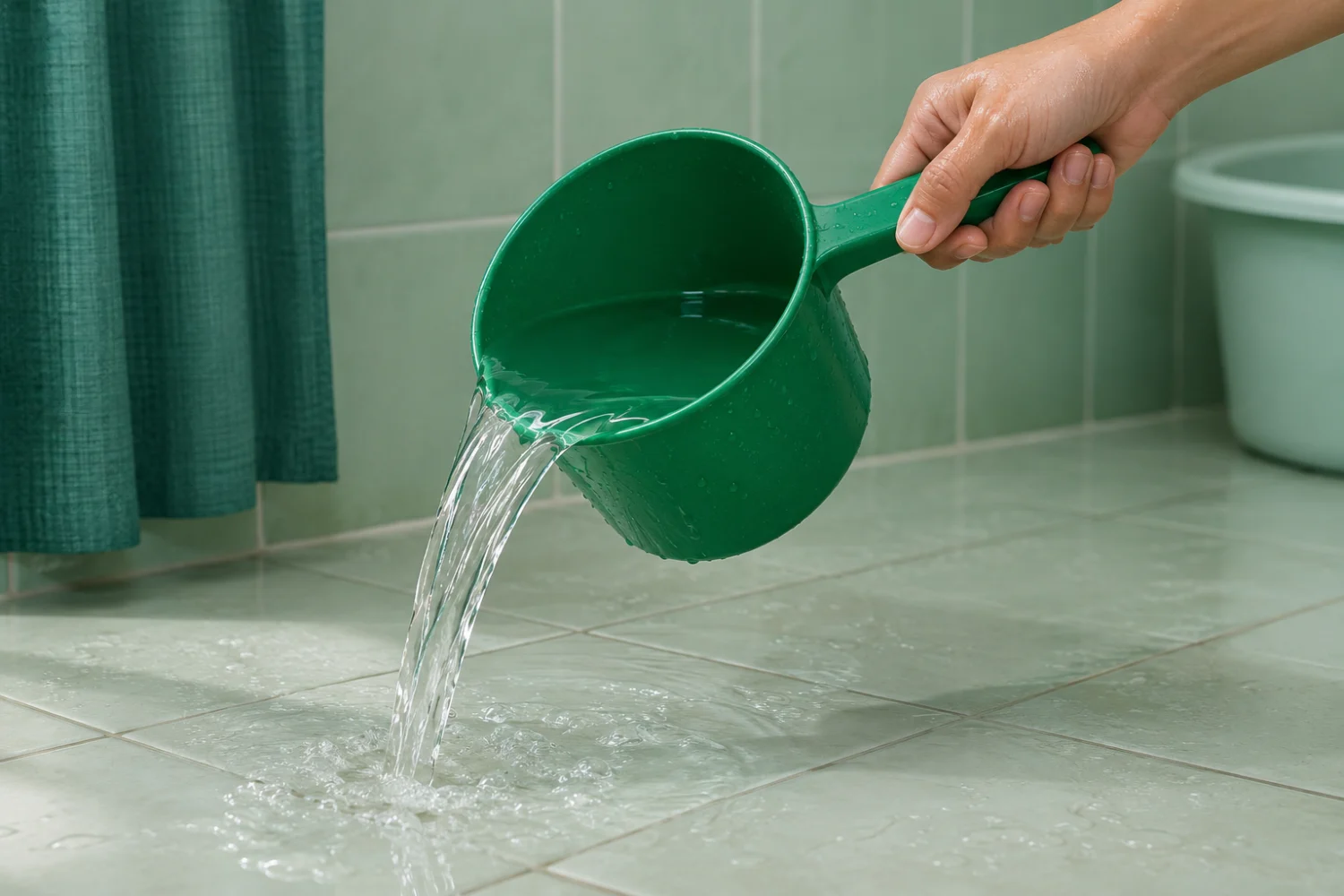
Look for a small, open bowl with a handle extending from one side. The opening is wide enough to let water enter quickly when the bowl is dipped into a container. The handle gives your hand a place to grip above or beside the water. A familiar modern example is a molded plastic dipper with a round bowl and a straight or slightly curved handle. Some handles have a hole at the end for hanging.
Shape varies between models. One bowl may be shallow with a broad opening, while another may be deeper with sides that taper toward the base. A deep bowl can be convenient when there is plenty of water in the bucket. A shallower bowl may be easier to angle when the water level falls. Handle length matters too. A long handle gives you more reach, while a short one may be easier to turn in a crowded washing area.
Tabo and Timba Have Different Roles
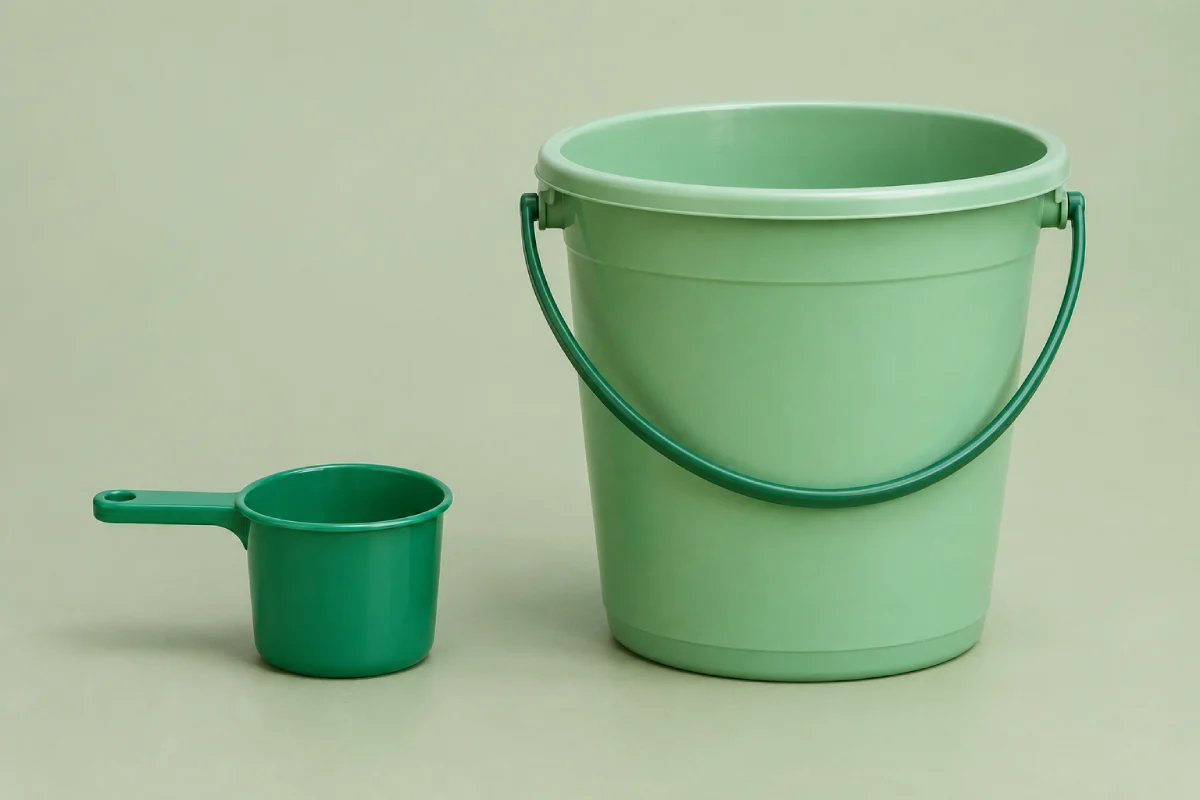
In Filipino usage, a timba is a bucket and a tabo is the dipper. You can fill a timba at a tap, put it down where the water is needed, and take several scoops from it with the tabo. Once the bucket is on the floor, the dipper does the work of moving smaller amounts. This pairing is easy to see in a bathroom where the bucket stays beside a faucet or close to a floor drain.
Imagine rinsing soap from one tile near the edge of the room. Tilting a full bucket can send water across a wide area. With a dipper, you can stand closer to the tile, lower the rim, and release a smaller stream. If the soap is still visible, you can take another scoop. The bucket holds the supply throughout the task. The dipper lets you decide how much to use on each pass.
How the Bowl Fills and Pours
To fill a tabo, tilt the opening slightly as you lower the bowl into the water. Once water passes over the rim, turn the bowl upright and lift it by the handle. With a low water level, you may need to angle the bowl farther to get a partial scoop. Some bucket shapes leave enough room to make that movement easily. Others become too narrow near the base, even though the dipper passes through the opening.
For a controlled pour, bring the rim close to the place where the water should land before tilting the handle. A partly filled bowl gives you more room to adjust your grip as you move it. This is useful when filling a small basin or rinsing along the edge of a tile. For a broader rinse, you can raise the bowl a little and change its angle as you pour. The movement is easy to practice over a sink or basin where any spilled water can drain.
Choosing a Dipper That Fits the Bucket
Start with the narrowest part of the bucket opening that the bowl has to pass through. A carrying handle, a molded rim, or a lid that only opens partway can reduce the usable space. Compare that opening with the widest part of the dipper bowl. If you can try the two pieces together, check whether you can lower the dipper, tilt it, and lift it again without scraping the sides or twisting your wrist.
Then consider how much water you actually want to move. A larger bowl can reduce the number of trips when filling a basin, but a full dipper is heavier and easier to spill if the handle is awkward to hold. A smaller bowl can be more convenient for short pours close to the floor or for use with a narrow bucket. If several people share the same dipper, a comfortable grip matters more than choosing the largest size that fits.
What to Check on the Handle, Rim, and Base
The handle should feel stable when the bowl is full. Look where it meets the bowl, since that joint takes the load each time you lift and tilt it. If the handle flexes enough to make the pour hard to control, try a smaller scoop or compare it with a firmer handle. A rough edge can also make a handle uncomfortable when your hand is wet. Run a finger lightly along the grip before choosing a new dipper.
The rim determines where water leaves the bowl. A smooth, even rim is sufficient for ordinary scooping and rinsing. A shaped lip can help direct water into a narrow opening. The base matters if you tend to set the dipper down between pours. A bowl that rests flat can sit on a shelf or beside a basin. A bowl that tips over easily may be more practical to hang from a hook, if its handle is designed for that.
How a Tabo Compares With a Cup or a Jug
A cup can transfer water in a pinch. Its grip may sit close to the bowl or require you to hold the outside, so your fingers can get wet as you scoop. A jug is useful when you want to carry water farther or pour through a defined spout. The tabo is shaped for repeated scooping from an open container. Its broad bowl lets water enter quickly, and its projecting handle lets you dip, lift, and pour with one hand. That combination explains why it works well beside a bucket in a washing area.
If you are labeling a photograph, water dipper gives English readers the function, and tabo gives them the Filipino name. A photo with both the dipper and the bucket can also show which one is the timba. In a close-up, include the full handle and enough of the bowl to make the opening visible. In a wider photograph, a tap or basin provides scale and shows where the water comes from and where it might go.
Frequently Asked Questions About the Tabo
What is the English name for a tabo?
Water dipper is a clear English translation. If you are introducing the Filipino term to someone unfamiliar with it, you can write “tabo, a handled water dipper” on first use.
What is the difference between a tabo and a timba?
A tabo is the smaller dipper you hold and tip. A timba is the bucket that holds the water. You can leave the timba on the floor while you move water one scoop at a time with the tabo.
Does a tabo need a spout?
No. Water can flow over the rim when you tilt the bowl. A shaped lip can help narrow the stream, but the amount of water in the bowl and the angle of the pour also affect where it goes.
How can I tell whether a tabo will fit my bucket?
Measure the usable opening of the bucket and the widest part of the dipper bowl. Leave enough room to angle the bowl inside the bucket. If the bucket narrows toward the bottom, check the space at the depth where you expect to scoop.
How much water does a tabo hold?
Capacity varies by model. To measure a particular dipper, fill it to the level you would normally carry and pour that water into a measuring jug. This gives you a practical capacity for that dipper.
Does a tabo have to be made of plastic?
Plastic is common in modern household dippers. The term describes the handled water dipper, so the material alone does not determine whether an object can be called a tabo.